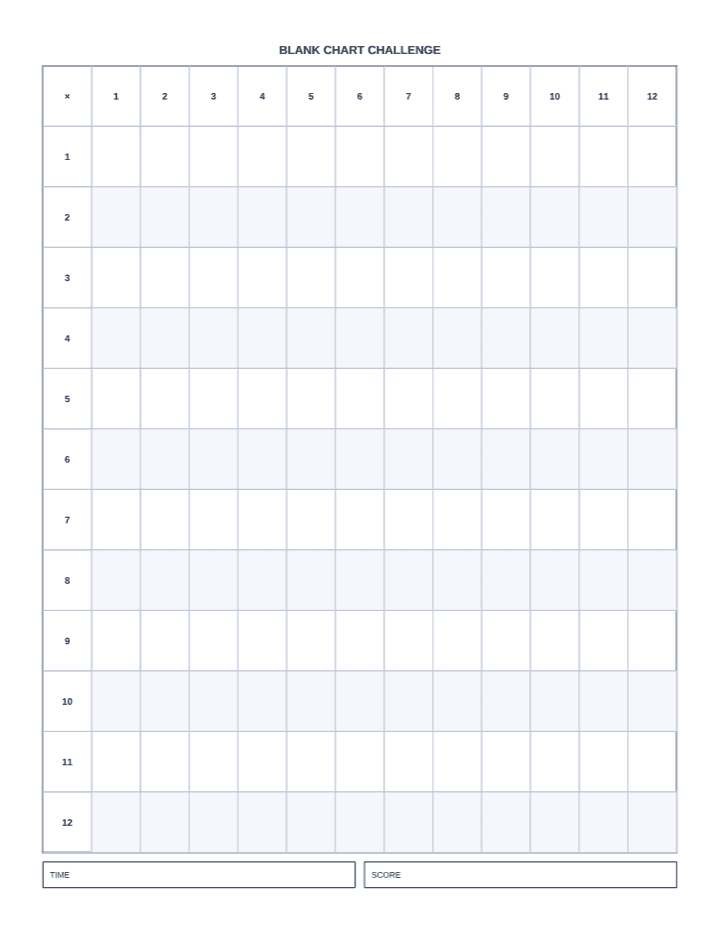
Blank Multiplication Chart 1-12
LETTER · A4 · Portrait · Free PDF
Free · No sign-up · Instant download
Free printable blank multiplication chart 1-12 PDF. Empty 12×12 grid for students to fill in from memory — the most effective format for building multiplication fluency. Use for timed drills, self-assessment, and weekly practice. Available in Letter and A4.
About This Blank Multiplication Chart 1-12
Free printable blank multiplication chart 1-12 PDF. Empty 12×12 grid for students to fill in from memory — the most effective format for building multiplication fluency. Use for timed drills, self-assessment, and weekly practice. Available in Letter and A4. This printable is available in US Letter (8.5 × 11 inch) and A4 (210 × 297 mm). All files print correctly at 100% scale on any home or office printer.
Specifications
- Table range
- 1 × 1 to 12 × 12
- Total cells
- 169 cells (12×12 + headers)
- Chart type
- Blank (to fill in)
- Recommended grade
- Grade 3–5
- Available sizes
- US Letter, A4
How It Compares
The blank 1-12 chart is the practice companion to the filled chart. Students fill it in from memory rather than reading it passively — which is a much better study method. Use it weekly for timed sessions of 5–10 minutes.
Printing Tip
For a durable classroom reference, print on cardstock and laminate. For practice, print weekly and use a timer — regular timed sessions help students notice their own progress.
Usage Rights
PrintableCove's blank multiplication chart 1-12 is free to download and print for personal, classroom, and homeschool use. No account required, no watermarks, no expiry date. You may print unlimited copies for your students or children. Please do not redistribute or resell the PDF files — if you want to share this resource, link to this page instead.