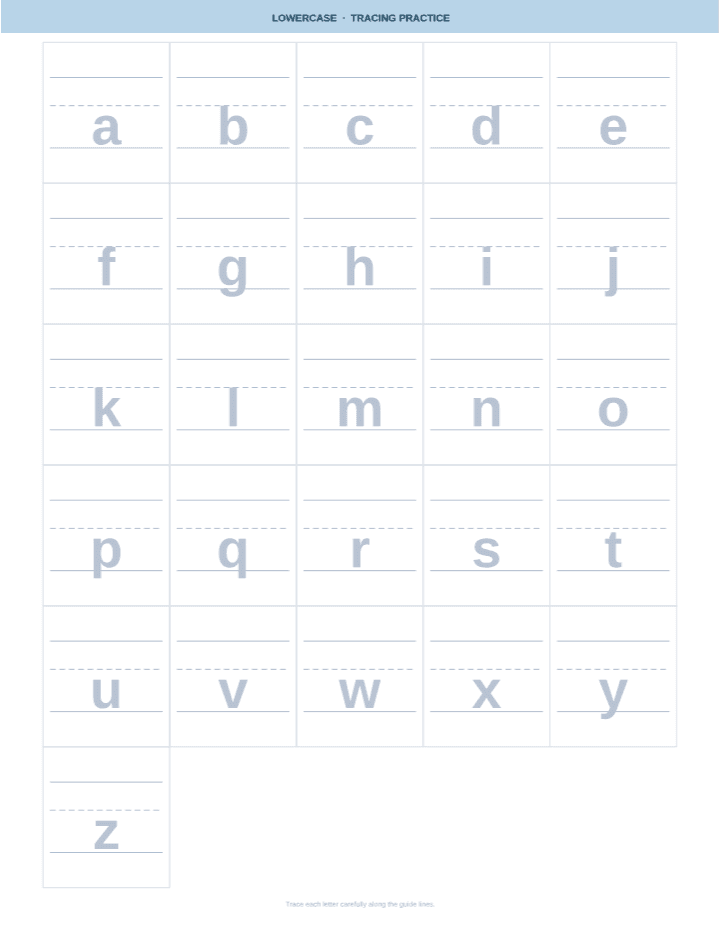
Lowercase Alphabet Tracing
LETTER · A4 · Portrait · Free PDF
Free · No sign-up · Instant download
Free printable lowercase alphabet tracing worksheets PDF. All 26 small letters a–z with dotted tracing guides. Lowercase letters are used far more frequently in reading and writing than uppercase. Builds fine motor skills, letter formation, and phonics readiness in preschool and kindergarten children. Letter and A4.
About This Lowercase Alphabet Tracing
Free printable lowercase alphabet tracing worksheets PDF. All 26 small letters a–z with dotted tracing guides. Lowercase letters are used far more frequently in reading and writing than uppercase. Builds fine motor skills, letter formation, and phonics readiness in preschool and kindergarten children. Letter and A4. This printable is available in US Letter (8.5 × 11 inch) and A4 (210 × 297 mm). All files print correctly at 100% scale on any home or office printer.
Specifications
- Letters covered
- a-z (26 lowercase)
- Worksheet style
- Tracing
- Layout
- 5 columns × 6 rows
- Guide lines
- Baseline, midline, and top line per cell
- Available sizes
- US Letter, A4
How It Compares
Lowercase letters are more complex than uppercase and require more fine motor precision. Children typically begin lowercase practice after establishing uppercase familiarity. Lowercase letters are also more frequently encountered in reading, making this worksheet particularly valuable for bridging tracing practice with early literacy skills.
Printing Tip
Use a soft pencil (HB or 2B) for tracing so children can erase and retry. Have them trace each letter 3 times before writing independently on the blank lines.
Usage Rights
PrintableCove's lowercase alphabet tracing is free to download and print for personal, classroom, and homeschool use. No account required, no watermarks, no expiry date. You may print unlimited copies for your students or children. Please do not redistribute or resell the PDF files — if you want to share this resource, link to this page instead.